
Key Takeaway: The referee awarded the penalty try based on World Rugby Law 8, ruling that England prop Ellis Genge’s illegal collapse of the maul prevented a probable try. This decision automatically gave France 7 points and a yellow card for England, shifting the momentum in a historic 48-46 finale.
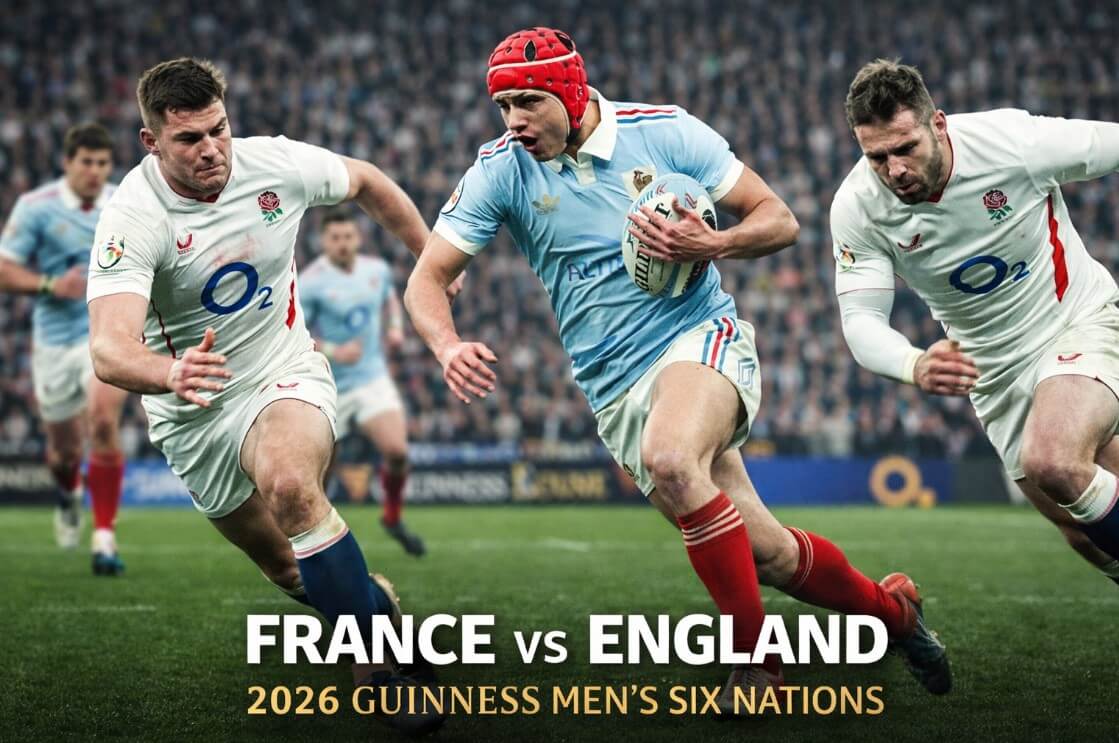
One moment in the clash between the France national rugby union team and the England national rugby union team during the 2026 Six Nations Championship quickly became one of the most debated refereeing calls of the tournament.
Late in the first half, with England defending their own try line, the referee awarded a penalty try to France after consulting the TMO. The decision automatically gave the hosts seven points and reduced England to 14 players, triggering immediate debate among fans and pundits.
The incident raised a question many viewers asked during the match: why was France awarded a penalty try?
The Turning Point
Watch from the 5:14 mark to see how the French maul powers forward and the exact moment when England’s defense illegally collapses the maul just before the try line. “Do you think the maul would have scored a try without the collapse? Let us know what you think in the comments.”
The decisive moment came during a sustained French attack near England’s try line at the Stade de France. After winning a line-out inside the English 22, France formed a driving maul and began pushing toward the goal line. As the maul advanced, England prop Ellis Genge was judged to have illegally collapsed the structure in an attempt to halt the drive.
The referee stopped play and referred the incident to the TMO. After reviewing the footage, the officials concluded that the illegal action had prevented a likely try. Under rugby union rules, that assessment triggers one of the sport’s most severe sanctions: a penalty try, automatically awarding seven points and a yellow card to the offending player.
Breaking Down Law 8
The ruling is based on Law 8 of the Laws of the Game, which governs penalty tries in rugby union. According to World Rugby regulations, a penalty try is awarded when:
- A defending player commits foul play.
- The referee believes a try would probably have been scored if the offence had not occurred.
The law is designed to prevent teams from deliberately breaking rules near their own try line to stop a certain score. Common situations that lead to penalty tries include:
- Deliberately collapsing a maul moving toward the line.
- Illegal tackles preventing grounding.
- Intentional knock-ons stopping a clear scoring chance.
In this case, officials ruled that England’s illegal collapse halted a maul that had clear momentum and a realistic chance of crossing the line.
Referee Decision Poll
Player Ratings: The Highs and Lows
While the penalty try was the technical turning point, individual performances defined the 48-46 thriller. Here is how the key protagonists fared:
Expert Reaction & Final Verdict
The decision immediately divided opinion. Some observers argued the ruling was consistent with modern officiating, noting that referees have become increasingly strict when defending teams disrupt mauls close to the line. Others suggested the decision was marginal, pointing out that the maul had not yet reached the goal line.
England head coach Steve Borthwick later acknowledged his team’s discipline issues: “We must avoid putting referees in positions where such decisions become necessary.”
While the penalty try was a pivotal moment, it did not settle the contest. The match ultimately turned into a spectacular attacking battle, concluding with the hosts lifting the 2026 Six Nations title. England was left to reflect on a match defined by fine margins—and one refereeing decision that will remain a talking point for years.