
- Alexander Volkanovski: Before the Octagon, There Was Rugby
- How Big Was: Alexander Volkanovski When He Played Rugby?
- Rugby League vs Rugby Union: Why It Matters
- Alexander Volkanovski Play For?
- The Transformation: From the Rugby Pitch to the Octagon
- Expert Insight: Is It Possible to Go Back to That Weight?
- Alexander Volkanovski Rugby Photos: The Viral Evolution
- Career Evolution Comparison
- Athlete Profile
- Not a Detour: The Real Origin of Volkanovski’s Dominance
- FAQ
Alexander Volkanovski: Before the Octagon, There Was Rugby
During a live broadcast, Joe Rogan casually mentioned a detail that sounded almost exaggerated. Jon Anik confirmed it seconds later: before dominating in the Ultimate Fighting Championship, Alexander Volkanovski weighed over 200 pounds while playing rugby.
Far from being just a fun fact, that past explains a huge part of what we see today inside the octagon. His story didn’t begin in MMA; it started on Australian rugby fields. There, he built a physical and mental foundation, where he built a physical and mental foundation that’s rare even among elite athletes.
How Big Was: Alexander Volkanovski When He Played Rugby?
When analyzing his early athletic years, one detail stands out above all: his physique.
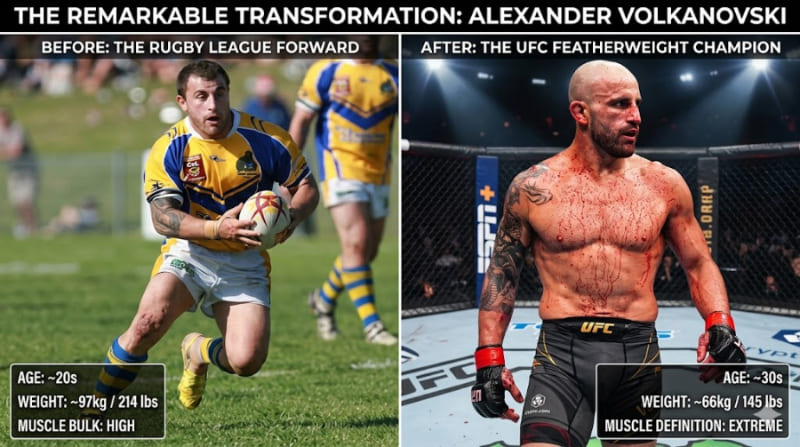
At just 5’6″ (168 cm), Alexander Volkanovski competed at around 214 lbs (97 kg). This wasn’t just bulk it was a compact, impact-ready build designed for constant collisions.
He played as a Front Row Forward (Prop), one of the most physically demanding positions in rugby league. Unlike more open-field roles, this position revolves around direct contact, endurance, and the ability to move forward no matter the resistance.His style was simple but effective: he carried the ball straight into defenders, absorbed hits, and kept pushing forward. That mindset would later define his identity as a fighter.
Rugby League vs Rugby Union: Why It Matters
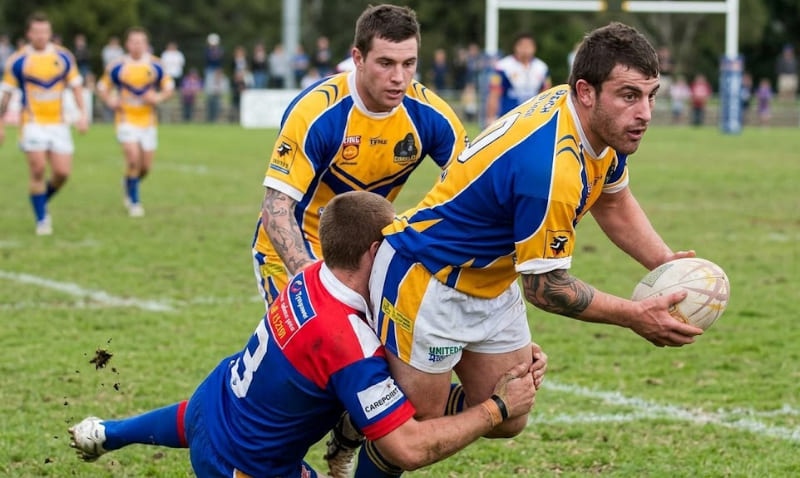
A key detail that’s often overlooked: Volkanovski didn’t play traditional 15-player rugby (Rugby Union), but Rugby League a 13-player variation.
The difference is significant:
- Rugby League is faster
- It has fewer stoppages
- And it demands constant contact in repeated sequences.
This format forces players to develop exceptional cardio and a much higher tolerance for impact.
In other words, he didn’t just get strong… he became relentless.
Alexander Volkanovski Play For?
Before transitioning to MMA, Volkanovski was already a standout in regional competitions.
He played for the Warilla-Lake South Gorillas…
His achievements back it up:
- Mick Cronin Medal (2010) as the league’s best player
- Man of the Match (2011 Grand Final) after leading his team to the title
He also had junior development ties with the Illawarra Steelers, reinforcing that his rugby career wasn’t casual—it was structured and competitive.
The Transformation: From the Rugby Pitch to the Octagon
His transition into mixed martial arts started almost as a way to stay fit during the off-season not as a professional ambition. At 23, he began training simply to stay active.
But the process quickly turned into a radical transformation.
Dropping from 214 lbs (97 kg) to 145 lbs (66 kg) isn’t just “dieting.” In athletic terms, it’s an anomaly. While most fighters cut 10–15 pounds, Volkanovski completely reshaped his body composition and metabolism.
And most importantly he didn’t lose performance along the way.
Expert Insight: Is It Possible to Go Back to That Weight?
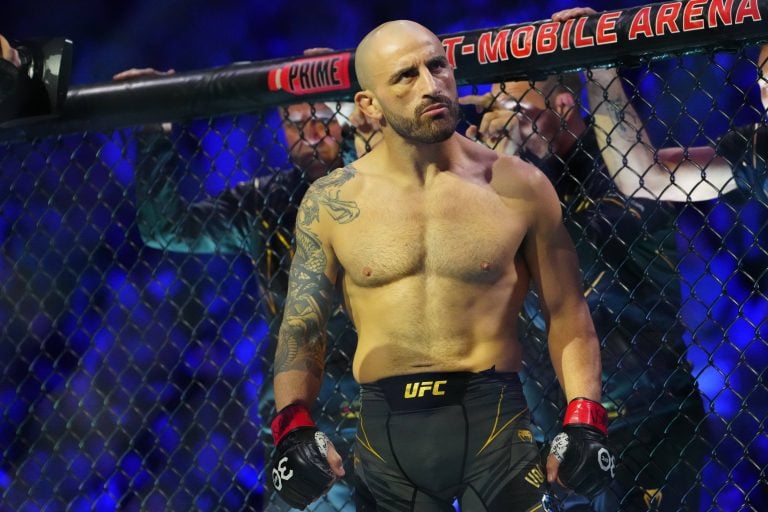
From a physiological standpoint, returning to 214 lbs wouldn’t be impossible… but it would be highly inefficient.
Performance experts agree that an elite athlete’s body adapts to the environment it competes in. In Volkanovski’s case, his metabolism has been optimized for years to perform at featherweight—not to sustain a rugby-level mass.
Gaining that weight again would require:
- A significant increase in caloric intake
- A shift toward hypertrophy-focused training
- And most importantly, sacrificing speed, endurance, and efficiency
Additionally, after years of controlled weight cuts, the body becomes highly efficient at maintaining a specific range. Reversing that would be not just physical but metabolic.
In simple terms: he could do it… but he’d lose what made him a champion.
The Psychological Factor: Pressure as Identity
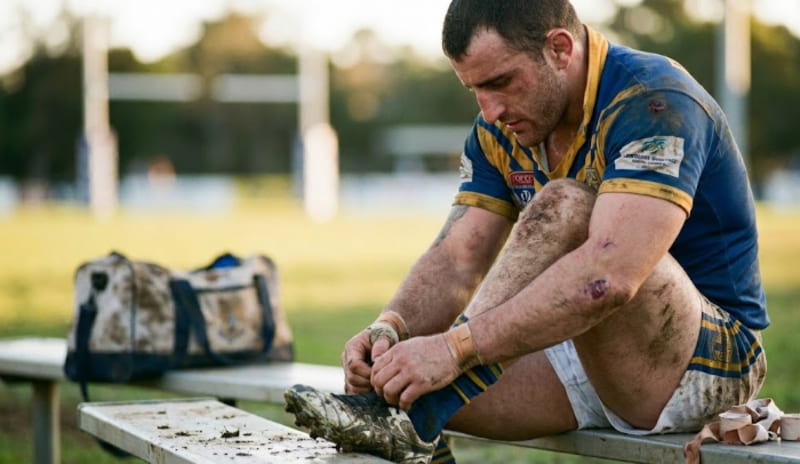
Beyond the physical transformation, there’s a less visible but equally important factor: mindset.
Rugby especially in contact-heavy positions teaches a simple rule:
if you move backward, you lose ground.
That logic is still present in his fighting style. Volkanovski doesn’t wait, hesitate, or give space. He pressures, advances, and forces opponents to react constantly.
It’s not by chance; it’s a learned behavior that is passed from one sport to another.
Alexander Volkanovski Rugby Photos: The Viral Evolution
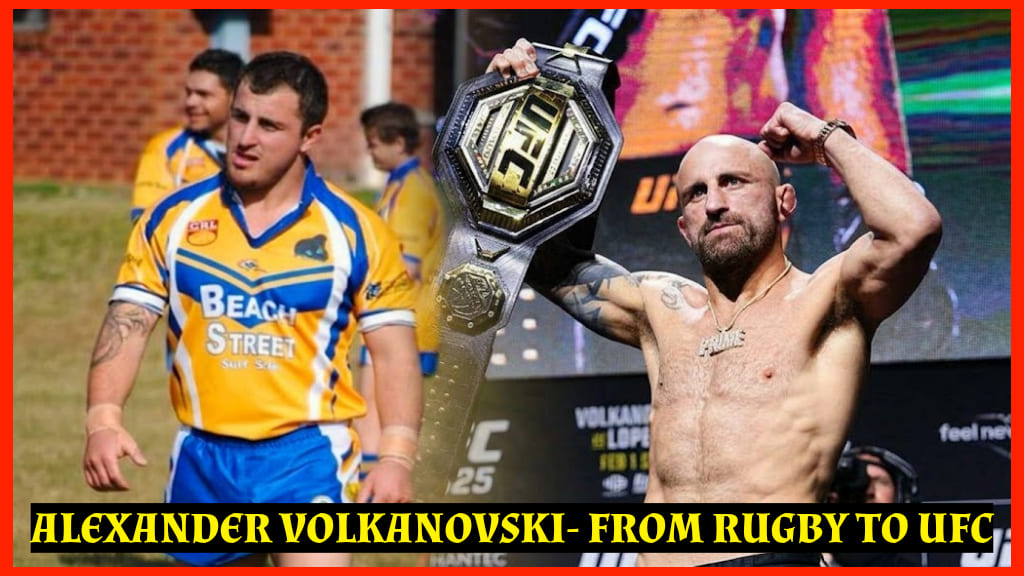
Photos from his rugby days, wearing the yellow and blue Gorillas jersey, have gone viral for one obvious reason: he looks like a completely different person.
The contrast is striking. Back then, a dense, collision-built frame; today, a lighter, sharper, more efficient version.
Yet beneath that transformation lies the same foundation: power, balance, and endurance.
Career Evolution Comparison
Athlete Profile
|
Rugby
|
UFC
|
|
|---|---|---|
| Weight |
214 lbs
(97 kg)
|
145 lbs
(66 kg)
|
| Category |
Semi-pro
|
Professional
Champion
|
| Role |
Front Row (Prop)
|
Featherweight
|
| Impact Power |
EXTREME
97kg Prop
|
ELITE
KO power at 66kg
💥 5 KOs
|
| Weight Difference |
+31 kg
compared to UFC
|
Base competition weight
|
Not a Detour: The Real Origin of Volkanovski’s Dominance
Volkanovski’s rugby career wasn’t a detour it was his foundation.
While many fighters grew up in gyms or on wrestling mats, he developed by colliding with 220-pound opponents in relentless sequences of impact. That kind of pressure didn’t just shape his body it shaped how he competes.
So when someone tries to pressure or take him down in the octagon today, his reaction is almost instinctive. There’s no surprise, no hesitation. He’s been in tougher, more chaotic, more physically demanding situations before.
In that context, his success in MMA doesn’t feel like a transition it feels like a natural evolution.