

Where did rugby originate?
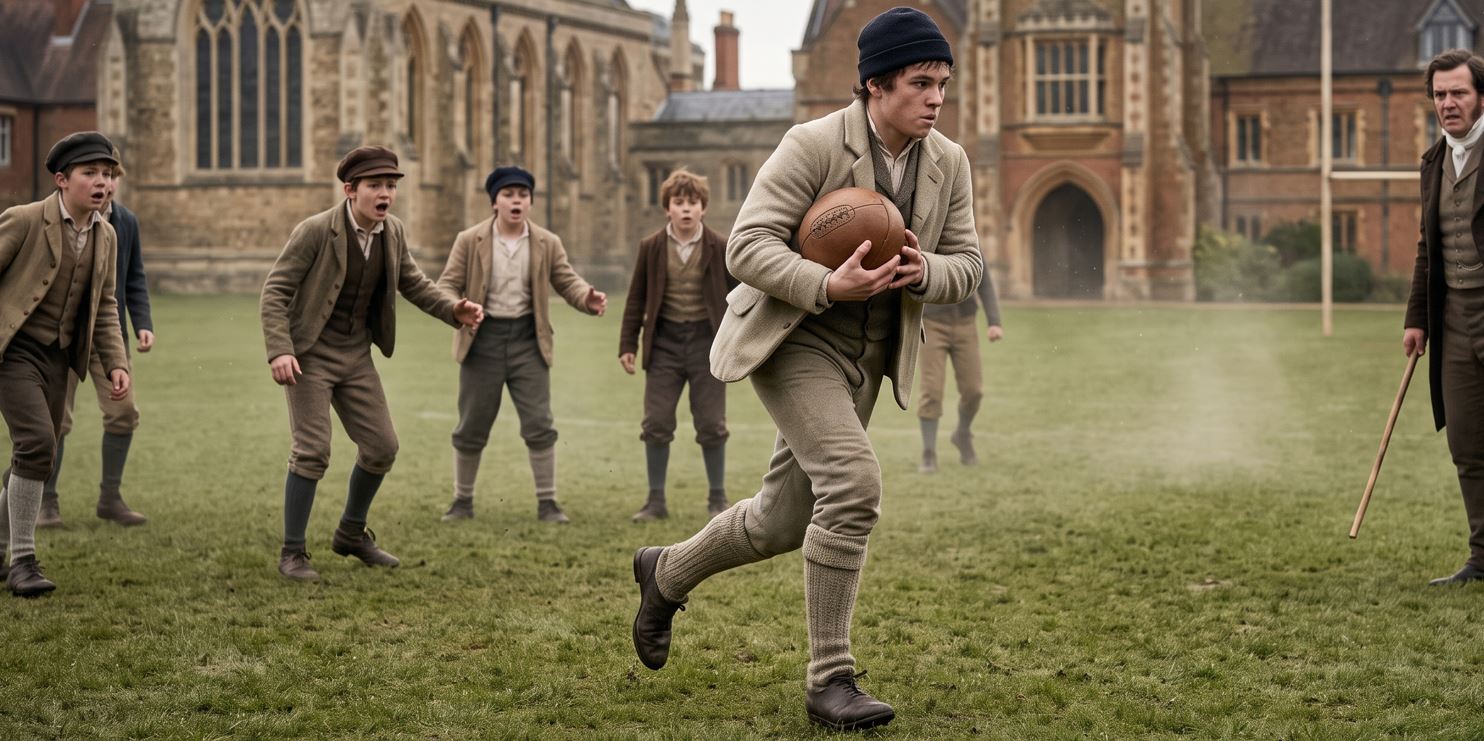
Rugby originated in 1823 in Warwickshire, England. During a local football match at the Rugby School, a 16-year-old student named William Webb Ellis famously caught the ball in his arms and ran with it forward, defying existing rules and giving birth to a brand-new sport.
Boom. There’s your textbook answer.
But history—especially sports history—is rarely that neat and tidy. The truth is a bit messier, covered in mud, and fiercely debated.
I remember watching a match in a packed pub just a few weeks ago. A proper sports bar where the crowd actually celebrates and you can hear the referee, none of that sterile hotel lounge nonsense.
A new fan pointed to the screen as the World Cup was mentioned and asked, “So, who is this Webb Ellis guy anyway?” The collective sigh from the veterans at the bar was deafening.
It made me realize how many people love the crushing tackles and the fast-paced action, but have absolutely no idea where the game came from.
The Webb Ellis Myth: Fact or Fiction?
Did Webb Ellis actually invent the game? Most sports historians lean towards “probably not.”
It’s a brilliant foundation myth. The image of a rebellious teenager breaking the rules to create something entirely new is incredibly romantic. However, there is no contemporary evidence from 1823 to back it up.
The story didn’t actually surface until 1876, four years after Webb Ellis had died.
An Old Rugbeian named Matthew Bloxam wrote a letter to a magazine claiming Webb Ellis was the first to take the ball in his arms. The Rugby Society loved the narrative so much, they etched it into stone. Literally.
How the Rules Evolved on the Pitch
Even if Webb Ellis didn’t single-handedly invent the sport on a random Tuesday, the Rugby School is undeniably the birthplace of the game’s framework.
Before the 1830s, “football” was a chaotic free-for-all. Every village had its own rules.
At the Rugby School, however, the boys started drafting written regulations. By 1845, the first official set of rules for “Rugby Football” was published.
These rules introduced concepts that seem completely insane to modern sensibilities—but they set the foundation for the sport we watch today.
The Original 1845 Rules vs. Modern Rugby
| Feature | 1845 Rugby School Rules | Modern Rugby Union |
| Hacking (Kicking shins) | Entirely legal and encouraged. | Banned (Thankfully). |
| Forward Passing | Strictly forbidden. | Strictly forbidden. |
| Points System | No points; only goals mattered. | Tries (5pts), Conversions (2pts), etc. |
| Team Size | Up to 300 players per side! | 15 players on the pitch. |
If you want to geek out over the exact wording of those original Victorian rulebooks, the archives at the World Rugby Museum are an absolute goldmine of historical data.
The Great Split: Union vs. League
You can’t talk about the origins of rugby without mentioning the dramatic divorce of 1895.
As the game spread from the elite public schools to the working-class towns of Northern England, a massive dispute erupted. Working-class players were losing wages to play on Saturdays and asked for compensation.
The wealthy southern establishment, fiercely protective of their “amateur” status, flat-out refused.
This wasn’t just a disagreement—it was a full-blown class war.
- 1871: The Rugby Football Union (RFU) is formed.
- 1895: Twenty-two northern clubs resign from the RFU.
- The Result: The birth of the Northern Rugby Football Union, which eventually became Rugby League.
From that moment on, we had two distinct codes. Union kept the 15-man format and the messy rucks, while League trimmed down to 13 players for a faster, more TV-friendly game.
Why This Matters Today
Understanding where rugby comes from isn’t just about winning trivia night at your local pub.
It explains the culture of the sport. It explains why the referee is treated with absolute respect (a holdover from its public school origins), and why the global trophy is called the Webb Ellis Cup.
Whether the 1823 legend is a historical fact or just excellent Victorian marketing, one thing is certain: picking up that ball changed the sporting world forever.