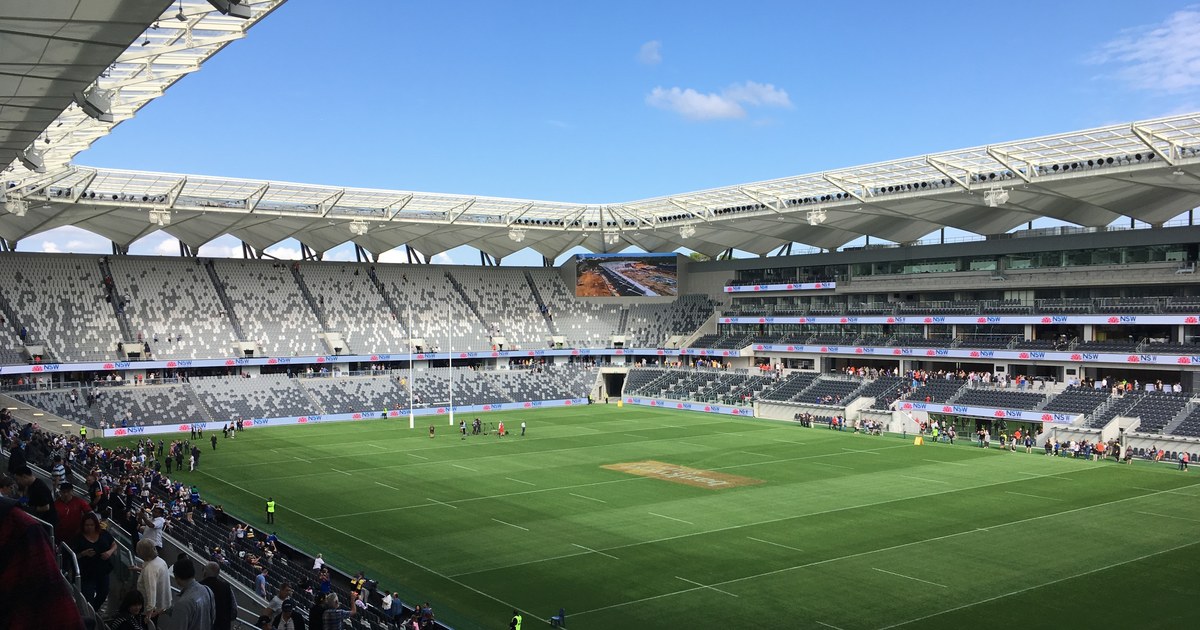

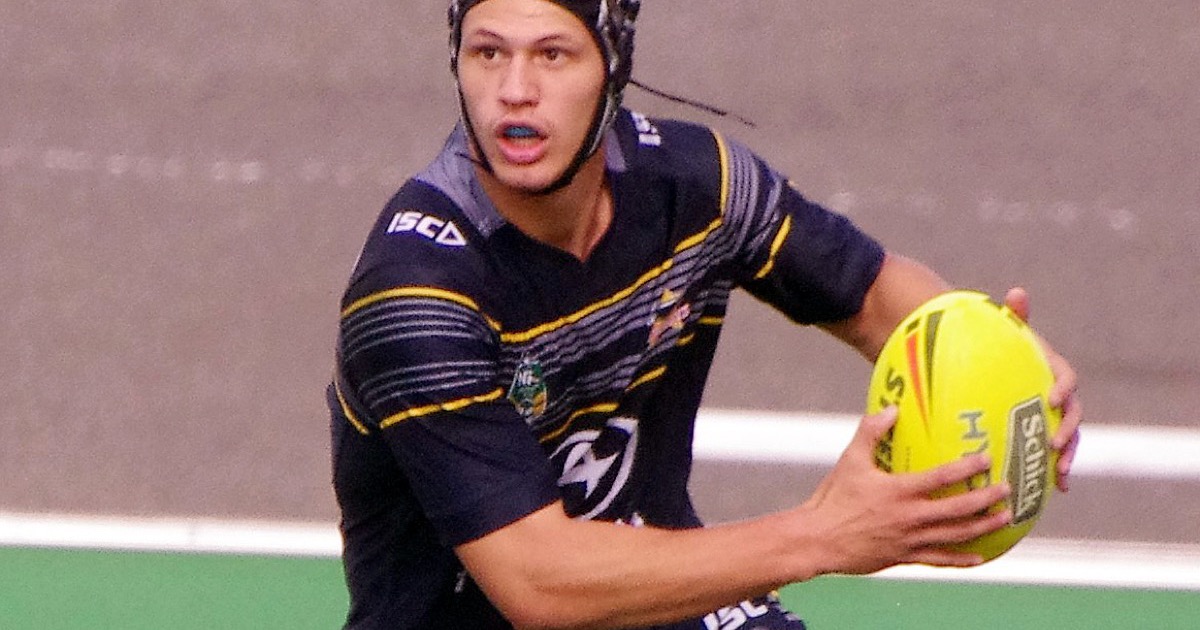
Queensland led 20–6. Twenty minutes on the clock. The shield was basically already on the Maroons’ bus — and then it wasn’t. One shoulder, one referee’s call, one Kalyn Ponga send-off later, and NSW had completed the most extraordinary comeback in State of Origin history. If you’re new to rugby league and have absolutely no idea what just happened last night at Accor Stadium, this is your guide.
What IS State Of Origin? The 101 Guide For Casual Fans
You’ve probably seen the chaos trending on social media. The painted faces, the sold-out stadiums, grown adults sobbing in maroon and blue jerseys. But what is State of Origin, exactly?
Simple version: it’s the most intense annual rugby league event on the planet. Three games — best of three — between two state teams: the Queensland Maroons and the New South Wales Blues. No club allegiances. No NRL ladder points at stake. Just pure, borderline-unhinged state pride.
The series has been running since 1980, and it has produced some of the sport’s most iconic moments. It’s the game that can end careers, build legends overnight, and apparently — as of Wednesday, May 27, 2026 — rewrite the history books.
The Golden Rule of “Origin”: Why It’s So Different
Here’s the thing that confuses new fans most: a player doesn’t represent the state where his club is based. He represents the state where he played his first competitive senior rugby league match. That’s it. That’s the rule.
So if a Queensland kid grows up dreaming of the Maroons, moves to Sydney to play for a club, and starts his professional career there — he wears Blue. He has no choice. It’s origin, not address. That’s what makes the selection battles so tribal, and why a player changing clubs never changes his State of Origin eligibility.
It’s a rule born in 1980 out of frustration — Queensland was sick of losing their best talent to NSW clubs and then watching those same players represent NSW. The Origin concept fixed that. It also created the fiercest rivalry in Australian sport.
The Kalyn Ponga Controversy: Why Was He Sent Off In Game I?
Right. The moment 2026’s series opener will be remembered for — possibly forever.
The score: Queensland 20, NSW 6. The clock: 57th minute. The play: relatively unremarkable, until it wasn’t.
NSW debutant Tolu Koula broke down the left edge with pace. Ponga came across in cover defence, trying alongside Sam Walker to push the winger into touch. The collision was heavy. Koula — who failed his Head Injury Assessment and didn’t return to the field — went down. Replays showed clearly: Ponga’s left shoulder had contacted Koula’s head. It wasn’t malicious. It wasn’t, in Ponga’s own words, intentional. But under the NRL’s strict contact laws, intent is irrelevant.
Referee Ashley Klein — the same official who has sent players from the field in previous Origin clashes — pointed to the dressing room immediately. Send-off. Red card. Gone.
What made it worse? Ponga had no idea he’d been sent off. He thought he’d been sin-binned — placed in the sin-bin for ten minutes. It was only when he reached the dressing room and Queensland officials informed him that the brutal reality hit: he wasn’t coming back.
Watch the official match footage and the immediate aftermath of Ponga’s controversial send-off below:
The Technical Breakdown: What Is a Shoulder Charge?
For the uninitiated, a shoulder charge in rugby league occurs when a defender uses their shoulder as the primary point of contact — rather than wrapping their arms around the ball carrier in a conventional tackle. Under current NRL rules, the shoulder charge has been banned since 2013 due to the serious head-injury risk it poses.
The NRL’s Bunker — rugby league’s video review system — reviewed the incident and confirmed Klein’s decision. No ambiguity. Grade Two shoulder charge.
The NRL judiciary subsequently charged Ponga at Grade Two. With an early guilty plea, he faces a 23% deduction of his match payment but retains his availability to play for the Newcastle Knights on Saturday. His State of Origin future? More complicated — and more on that shortly.
The Comeback NSW Nobody Will Ever Forget
The Maroons were down to 12 men in the second half after Ponga’s dismissal. And somehow, NSW capitalized on the advantage, scoring 16 unanswered points.
Ethan Strange crossed on debut in the 62nd minute to get the roll started. Nathan Cleary — calm, clinical, infuriating if you’re from Brisbane — added a try in the 71st minute. And then, with roughly 90 seconds remaining, the returning James Tedesco came down with a Nathan Cleary kick to score the match-winner. 22–20. Blues.
It passed Queensland’s own famous 1981 comeback — trailing 15–0 after 30 minutes to win — as the greatest margin overcome in series history.
WHO IS KALYN PONGA? ORIGIN, NATIONALITY AND CAREER BACKGROUND
If you searched “Kalyn Ponga” after that send-off — you and about three million other people.
Where Did Kalyn Ponga Grow Up? Nationality Explained
Ponga’s story is more complex than most. He was born on March 30, 1998, in Port Hedland, Western Australia — an outback mining town that doesn’t exactly scream rugby league heartland. His parents are from New Zealand, and Ponga is of Māori descent through his father’s lineage. That connection to New Zealand Māori culture is central to his identity; he has represented the New Zealand Māori representative team at international level.
So how is he eligible for Queensland in State of Origin? Under NRL rules, Origin eligibility is tied to where you played your first competitive senior rugby league game — not your birthplace, not your cultural background, not your passport. Ponga came through the North Queensland Cowboys system in Queensland, and that locked in his Maroons eligibility. Simple as that.
As Queensland selector Darren Lockyer once put it: “We know what Reece is capable of. The key now for Reece is how he responds to the disappointment. That quote was about a teammate’s omission, but it highlights the intense pressure of Origin selection, where heritage and strict eligibility rules constantly clash.
Position, Captaincy and Status in the NRL
Ponga is the captain and fullback of the Newcastle Knights. He is widely regarded as one of the most electrifying players in the game — and one of the most expensive, reportedly on a deal that made him the highest-paid player in NRL history when he signed his extension with the Knights.
His Origin stats speak for themselves: debut in 2018, Dally M Medal winner in 2023, multiple series victories with Queensland. He is, in normal circumstances, the type of player who makes you buy a ticket.
Wednesday night was not normal circumstances.
For his official statistics and career history, visit Kalyn Ponga’s NRL.com player profile.
WHY IS REECE WALSH NOT IN STATE OF ORIGIN 2026?
This question was being searched almost as frantically as Ponga’s send-off — and with good reason. Reece Walsh, at 23, is arguably the best fullback in the NRL right now. Brisbane Broncos won the 2025 premiership largely because of him. He played for the Kangaroos. And yet… he’s not in the Queensland squad for Game I.
The official answer: form and confidence.
Queensland selectors Darren Lockyer and Gene Miles left Walsh out of the 20-man squad, citing a rough patch following a facial fracture and a month off the field. Lockyer was direct about it: “Going into a big Origin game with confidence, it plays a huge factor.” Meanwhile, Ponga had returned from his own hamstring injury in career-best form — tearing apart the Rabbitohs and Dragons in his two weeks back — and coach Billy Slater simply couldn’t ignore it.
The unofficial answer? The Ponga-Walsh rivalry for Queensland’s No.1 jumper is one of the great selection headaches in modern rugby league. When both are available and in form, only one can play fullback. This series, it was Ponga’s shirt — at least until now.
Whether that changes for Game II depends on how Queensland responds to a heartbreaking 22–20 defeat… and what Reece Walsh does between now and June 17.
FREQUENTLY ASKED QUESTIONS
Yes. Kalyn Ponga represents the Queensland Maroons in State of Origin. He debuted for Queensland in 2018 and is one of their most celebrated fullbacks, having worn the No.1 jersey in multiple series. Despite his Māori New Zealand heritage, he is eligible for Queensland based on NRL Origin selection rules.
Ponga was sent off by referee Ashley Klein in the 57th minute for a shoulder charge on NSW debutant Tolu Koula. Replays confirmed Ponga’s left shoulder struck Koula’s head while attempting to defend. The NRL Bunker upheld the decision. Queensland were leading 20–6 at the time; NSW scored 16 unanswered points to win 22–20.
Walsh was omitted from Queensland’s Game I squad due to a dip in confidence and form following a facial fracture and extended absence. Selectors Darren Lockyer and Gene Miles chose Kalyn Ponga at fullback, noting his return to near career-best form. Walsh may be reconsidered for Game II depending on form and Ponga’s standing after the send-off.
A player represents the state where they first played senior competitive rugby league — not the state where their current club is based. A Queensland-born player who debuts for a Sydney NRL club represents NSW in State of Origin. Kalyn Ponga, born in Western Australia to New Zealand parents, represents Queensland because he came through the North Queensland Cowboys system.
State of Origin Game II 2026 will be played on Wednesday, June 17, 2026, at the Melbourne Cricket Ground (MCG). NSW holds a 1–0 series lead after their dramatic 22–20 comeback win in Game I.
Was Ponga’s red card fair or too harsh? Let us know your thoughts in the comments below.