
- Fact Sheet: Fergus Slattery
- Early Life and the Making of a "Tearaway" Flanker
- The Remarkable Career of a True Irish Rugby Great
- World Rugby Hall of Fame and Post-Retirement Career
- Later Years, Family, and Health Battles
- Fergus Slattery RIP: The Rugby World Mourns a Titan
- Frequently Asked Questions About Fergus Slattery
Irish rugby has lost one of its most illustrious sons. Fergus Slattery — “Slatts” to friends and foes on the pitch — passed away on June 4, 2026, at the age of 77. But his legacy doesn’t fade with his death; it becomes eternal.
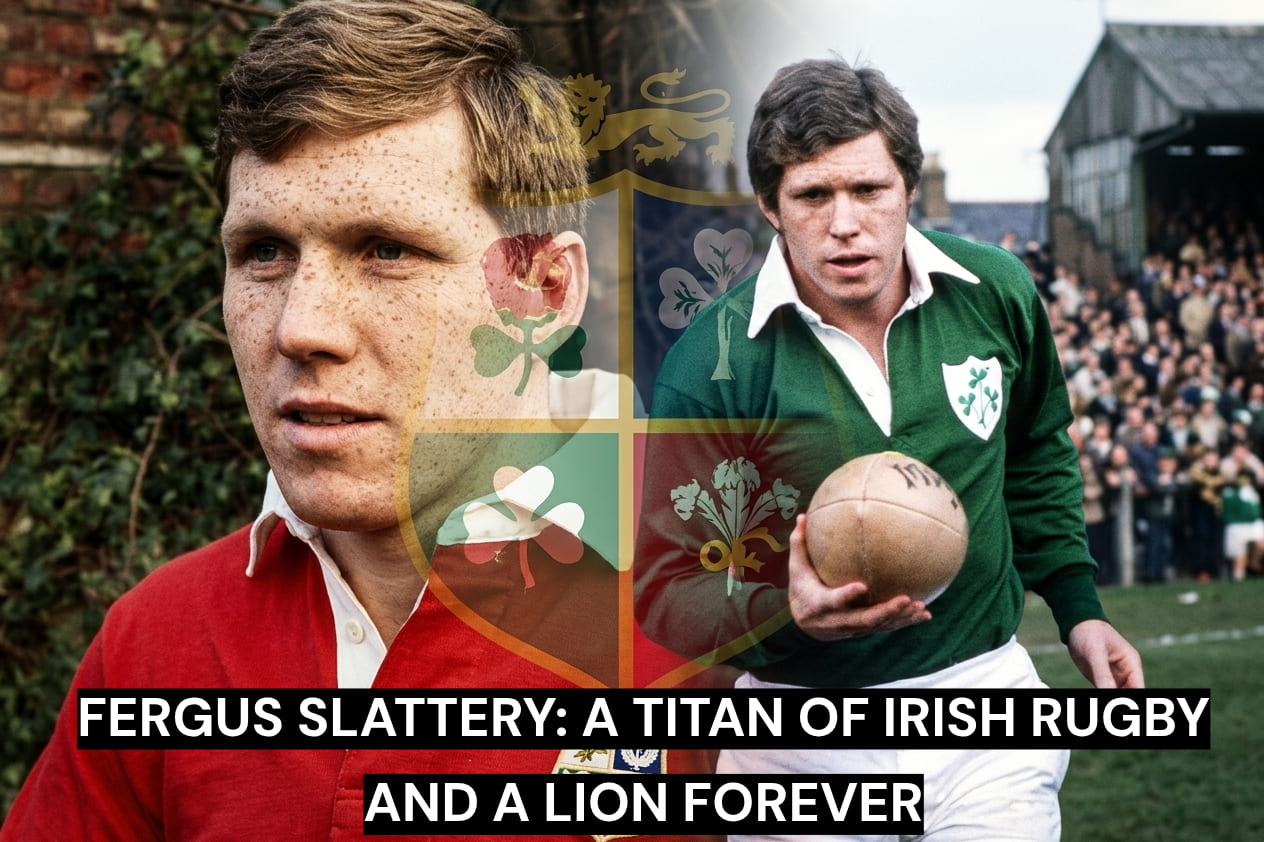
To understand what this Blackrock College flanker meant, you have to travel back to the 1970s—a time when rugby was pure passion. No modern protection, no concussion protocols; just bone against bone. Slattery was the “tearaway”—the one who broke defences and hearts. The man who led Ireland to their first Triple Crown in 33 years and sweated for the British & Irish Lions on two historic tours. Today, the rugby world mourns a titan, and we celebrate his everlasting impact.
Fact Sheet: Fergus Slattery
| Detail | Information |
| Full Name | John Fergus Slattery |
| Nickname | Slatts / The Tearaway |
| Born | 12 February 1949 |
| Died | 4 June 2026 (age 77) |
| Height | 1.85 m |
| Weight | 93 kg |
| Education | Blackrock College, UCD |
| Position | Open-side Flanker |
Early Life and the Making of a “Tearaway” Flanker
Slattery was born in 1949 in post-war Ireland, a country where rugby was deeply rooted in community pride. His first contact with the oval ball was at Blackrock College, an institution synonymous with rugby excellence. There, a skinny, long-limbed lad—too long for a traditional flanker by the standards of the day—learned that speed, anticipation, and relentless aggression could easily make up for a lack of sheer bulk.
He was an animal on the field,” remembers a teammate from those formative years. “Slatts got to the ruck before anyone else. And when he got there, he didn’t leave without making his presence felt.
His nickname “Tearaway” was born from that exact intensity. It wasn’t just a compliment; it was a warning to opposing fly-halves. At University College Dublin (UCD), he refined his tactical game, but it was at Leinster where his career exploded. Before professionalism, when players worked by day and roared by night, Slattery became a provincial legend.
The Remarkable Career of a True Irish Rugby Great
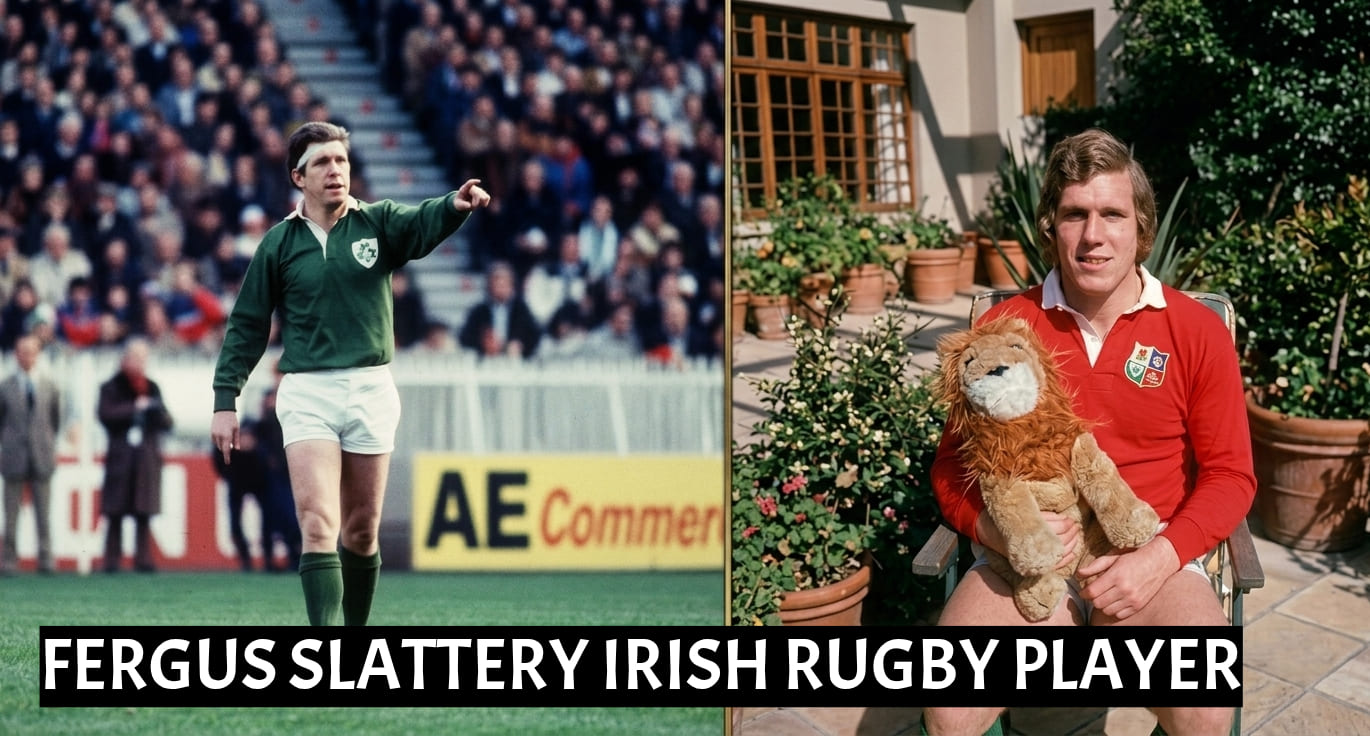
There are standard back-row forwards, and then there is the unique footprint of fergus slattery irish rugby player—a competitor who operated in a completely —a competitor who operated in a completely separate category of his own. His international debut came in 1970 against South Africa at the age of 21. Facing the Springboks, the most feared team in world rugby at the time, Slattery didn’t flinch. On the contrary, he played with a ferocious work rate, setting a standard for what a modern open-side flanker should be.
His international career totals 61 caps for Ireland. While that number might look common today, in the 1970s and early 1980s—with far fewer test matches played per calendar year—it represented an incredible marathon of physical endurance. What truly defines Slattery isn’t the numbers; it’s his sheer court presence and the way his long, wiry legs devoured the pitch in impossible defensive chases.
Domination with the British & Irish Lions (1971 & 1974)
If Ireland was his school, the British & Irish Lions were his university. In 1971, Slattery travelled to New Zealand with the Lions squad. Though he wasn’t an automatic starter for the Test matches, he absorbed the tactical nuances of Southern Hemisphere rugby.
Three years later, in 1974, came the iconic “Invincibles” tour to South Africa: 22 matches, 22 wins, and 0 losses. It remains the most perfect record in the history of British and Irish rugby touring teams. Slattery was a fundamental piece of that legendary side. His tackling efficiency in the brutal third Test against the Springboks remains mythical among historians.
Back then, work rate wasn’t measured with digital heat maps or GPS trackers. It was measured by the exhaustion and eventual respect of the opponent.
Captaincy and the 1982 Triple Crown Triumph
The year 1982 brought ultimate glory for Irish rugby, with Fergus Slattery leading the charge as captain. For the first time in 33 long years, Ireland secured the Triple Crown by defeating England, Scotland, and Wales in the same Five Nations championship campaign.
Slattery lifted the trophy with a face twisted in raw emotion. He was never a man of long speeches; he was a leader through action. The image of him holding the silverware—with graying hair and the smile of someone who had given absolutely everything to the jersey—remains a historic piece of folklore celebrated across Dublin.
World Rugby Hall of Fame and Post-Retirement Career
In 2015, the international governing body officially recognised what Ireland already knew: Slattery was formally inducted into the World Rugby Hall of Fame. It was a thoroughly deserved honour that cemented his status alongside the greatest to ever play the game.
Naturally, fans often wonder about his transition to normal life: What did Fergus Slattery work at after hanging up his boots? Off the field, Slattery built a highly successful, multi-decade career in commercial real estate and sales. He approached the business world with the exact same focus and energy he used to smash opponents on the pitch. For him, the concept of fergus slattery rugby was never just about sport; it was a lifelong philosophy of total commitment and work ethic.
Later Years, Family, and Health Battles
In his later years, Slattery stayed close to the sport, giving charity talks and attending international matches at Aviva Stadium. However, behind the scenes, decades of heavy impact began to take their toll.
The devoted fergus slattery wife stood by him until the very end, protecting his personal life fiercely from the media spotlight. Slattery was always a man of the pitch, completely uninterested in the front pages or celebrity status.
Over time, serious physical problems emerged. This wasn’t just standard aging; it was the accumulating wear and tear of the brutal rucks and unrecorded concussions of 1970s rugby. Consequently, fergus slattery health became a major concern within the rugby community. By 2024, it emerged that he was battling severe neurological complications. While the family maintained deep privacy, several media outlets discussed his progressive struggles with fergus slattery dementia, shedding light on the lasting costs paid by pioneering players of his era.
Fergus Slattery RIP: The Rugby World Mourns a Titan
On June 4, 2026, the news hit the global rugby community like an uncontrolled maul: fergus slattery rip. He passed away peacefully at the age of 77, surrounded by his immediate family.
The tributes from the rugby hierarchy were immediate and deeply emotional. Leo Cullen, current Leinster head coach, noted:
Fergus was a true pioneer. He taught us that the open-side flanker isn’t just a supporting unit; he is the very soul and pace of the team.
Hugo MacNeill, his former international teammate, added:
Slatts never complained. Not about a late tackle, and certainly not about life. He was a gentleman of the game, and true gentlemen never really leave us.
While the specific, official fergus slattery cause of death was not publicly detailed out of respect for his family’s wishes, it is widely attributed to the final complications of his long neurological battle. The rugby world has responded exactly as he would have wanted: with profound respect, silence, and tributes to an unrepeatable life.
Frequently Asked Questions About Fergus Slattery
He retired from international rugby in 1982, immediately following the Triple Crown triumph. His final match was a victorious encounter against Scotland at Lansdowne Road, capping off a stellar career at the absolute top.
Though the family has requested privacy regarding the specific clinical details, his death at age 77 is attributed to complications arising from a long-term neurological illness linked to his playing days.
Slattery earned 61 official caps for Ireland (18 of them as captain) and an additional 4 Test caps with the British & Irish Lions, totaling 65 appearances at the highest level of rugby union.
Rugby does not forget. And Fergus Slattery—the “tearaway” who never knew how to back down—will live on forever in every tackle, every ruck, and every young flanker who dreams of wearing the green jersey.