
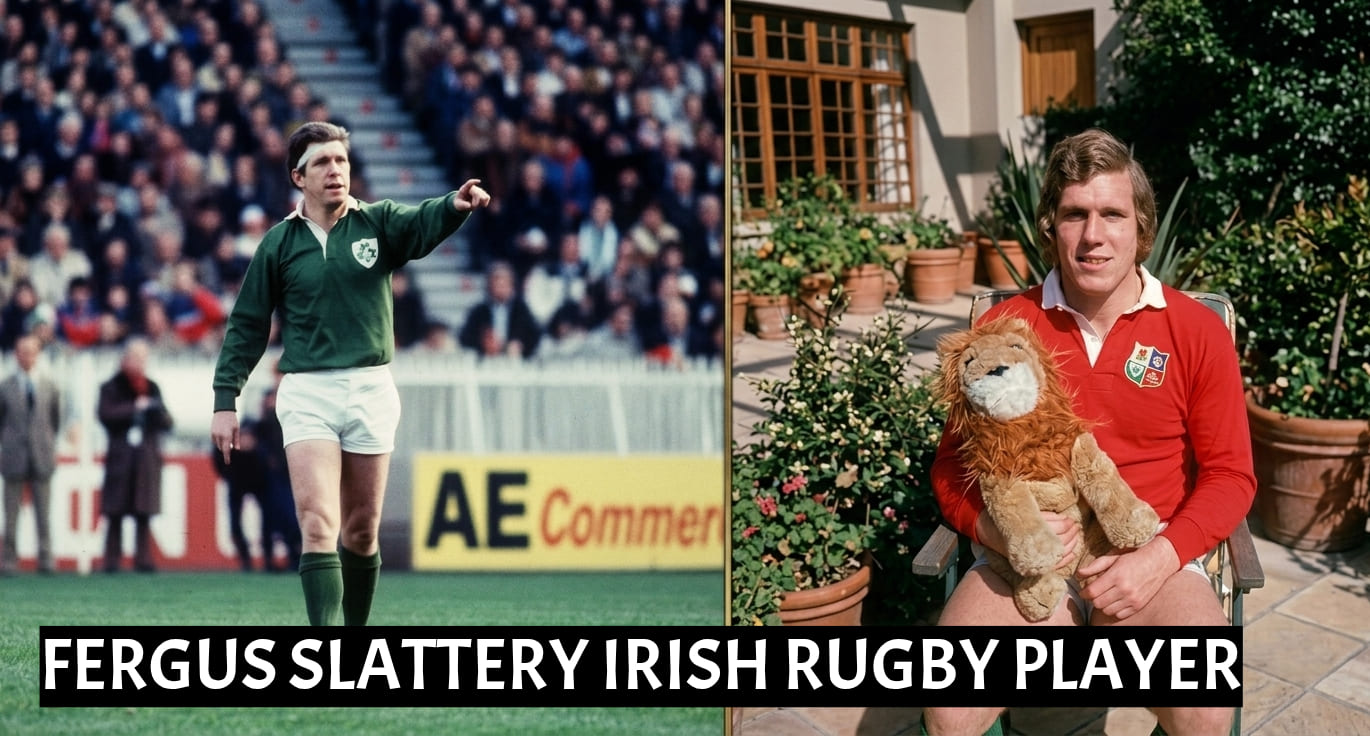
Fergus Slattery didn’t just wear the number 7 jersey for Ireland. He defined it.
In an era when the open-side flanker was expected to graft in the dark—unseen, unsung, buried under collapsing rucks—Slattery turned the position into something closer to theatre. That blistering pace, that relentless breakdown intelligence, and that almost predatory instinct for arriving precisely where chaos was about to erupt made him a pioneer. He was the definitive tearaway flanker before the term had even earned its permanent place in the rugby lexicon.
For the complete chronology of his life—from his earliest days in Dublin to his final chapter—read our complete biography of Fergus Slattery
The Making of an Irish Great: Blackrock and Leinster Roots
Every legend has an origin story. Slattery’s begins in Dún Laoghaire, County Dublin—and runs straight through two institutions that shaped the back-row forward as much as any international stadium ever would.
He came through Blackrock College RFC, one of the most respected rugby nurseries on the island of Ireland. From there, the path led to University College Dublin (UCD), where the game—and the man—began to take its recognisable shape.
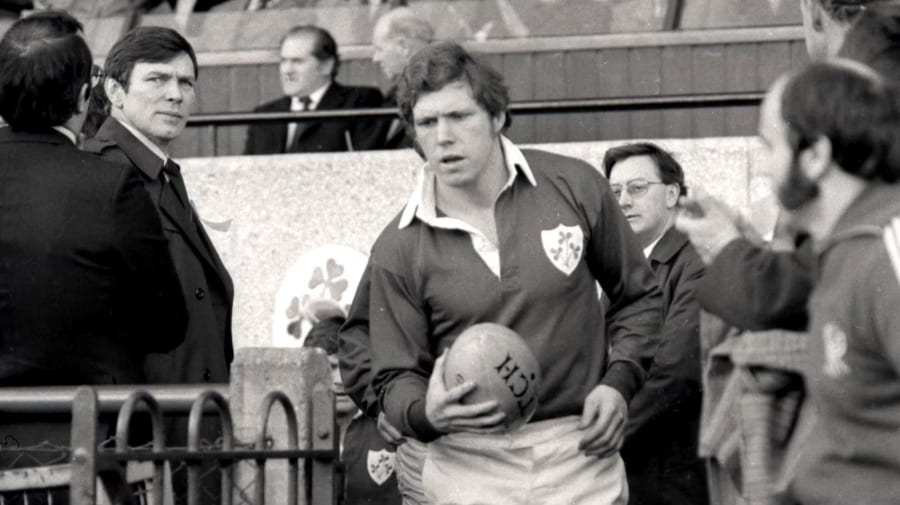
What team did Fergus Slattery play for? The full answer spans every tier of the game—club, provincial, national, and international:
- Blackrock College RFC & UCD (Club level)
- Leinster Rugby (Provincial level)
- Ireland (National team)
- British & Irish Lions & Barbarians (Elite invitational)
His years in Leinster deserve more attention than they typically receive. Sites like the BBC—or even the Lions’ official archives—tend to jump straight to his international career, as if everything before the green jersey was merely a prologue. It wasn’t. The province gave this iconic loose forward the tactical education, physical conditioning, and competitive edge that later made him invaluable to every coach in the Four and Five Nations.
Leinster shaped Slattery. Slattery shaped Leinster’s reputation. That relationship ran both ways.
Redefining the “Tearaway” Open-Side Flanker
Here is where the tactical analysis gets genuinely interesting—because “tearaway” sounds like a compliment paid to someone who just runs fast and hits hard. And yes, Slattery possessed both traits in abundance. But that, on its own, undersells his genius.
His recorded pace over 100 metres placed him in legitimate track sprint territory. Not “rugby fast”—fast fast. The kind of speed that makes opposing scrum-halves panic before they’ve even released the ball because they know the number 7 rugby specialist is already breathing down their neck. When you combine that athleticism with elite breakdown reading, you stop being a flanker who occasionally causes problems; you become the problem.
His technique at the breakdown was, frankly, decades ahead of its time. In an era when rucking was largely a brute-force operation consisting of heavy boots and raw willpower, Slattery understood angles, timing, and the precise split-second when a defensive structure could be destabilised. Modern coaches would frame his game as elite counter-rucking IQ or advanced breakdown systems thinking. In the 1970s, they just called it Slattery doing Slattery things.
The tackle, the chase, and the relentless ball-winning fused into a breakdown specialist who didn’t simply fill a position—he rewrote the tactical job description for Irish rugby entirely.
Captaining Ireland and the 1982 Triple Crown
If you had to choose one chapter from Slattery’s career as the defining moment—the scene that will still be talked about generations from now—most rugby historians would point here without hesitation: 1982. The Five Nations. The Triple Crown.
Under Slattery’s captaincy, Ireland ended a brutal 33-year wait for the Triple Crown. Let that figure sink in. Thirty-three years. That isn’t just a lean spell; that is an entire generation of Irish supporters who grew old without seeing their country lift that specific trophy. Some had been waiting since 1949.
He led them there. Not just as a figurehead Irish rugby captain, but as the beating engine of the team—setting the standard in training, in the changing room, and in the culture of a squad that dared, finally, to believe it could do something historic.
His career total tells its own story: 61 international caps, 18 of them as captain. Numbers you have to read twice to fully appreciate.
The context matters enormously here. This was the amateur era. There were no professional contracts, no strength-and-conditioning staff, no GPS tracking, and no individualised recovery protocols. Players held down full-time jobs, raised families, and then showed up at Lansdowne Road on a cold February afternoon to represent their country simply because they were proud enough to be asked. Sixty-one times, Fergus Slattery answered that call.
Beyond the Green Jersey: The Lions and the Barbarians
It would be a disservice to the history of the game to spend this entire profile on the green jersey and never acknowledge what Slattery did when he crossed into the other great traditions of British and Irish rugby.
- The 1974 British & Irish Lions Tour: Known ever since as “The Invincibles,” that historic campaign remains one of the most celebrated touring achievements in rugby history—22 matches, zero losses. Slattery was a core component of that unblemished record.
- The 1973 Barbarians Match: In January 1973, he featured in what many consider the greatest rugby match ever played: the Barbarians versus New Zealand at Cardiff Arms Park. While that game is immortalised by Gareth Edwards’ opening try, Slattery scored a vital try of his own in that famous 23–11 victory.
His Lions and Barbarians appearances weren’t footnotes to his Irish career. They were global confirmation that what Slattery did in Dublin was no local illusion. His world-class standard translated everywhere.
Frequently Asked Questions
Slattery represented Blackrock College RFC (club), University College Dublin – UCD (club), Leinster (province), Ireland (national team), the British & Irish Lions (1971 and 1974 tours), and the famous invitational Barbarians.
He played as an open-side flanker wearing the number 7 rugby shirt. The position demands the highest ground coverage, the fastest tackle recovery time, and a sharp, instinctive focus at the breakdown.
The term captured his signature playing style: breaking from set-pieces or loose play at extraordinary pace, hunting down the ball-carrier, and disrupting the breakdown before opposition defences could even organise.
Yes. In 2015, Slattery was formally inducted into the World Rugby Hall of Fame, cementing his status as a player who reshaped his position for a generation.
Conclusion
Some players leave records. Others leave blueprints. Fergus Slattery left both.
Sixty-one caps in a punishing amateur era and a Triple Crown that ended over three decades of national heartbreak. He earned his place in the ultimate pantheon of the sport not through the amplification of modern social media, but through pure, undeniable presence on the turf.
The fierceness with which he played, however, had consequences that belong to a different, harder story. Read our full analysis on Fergus Slattery, dementia, and the legacy of rugby’s health crisis